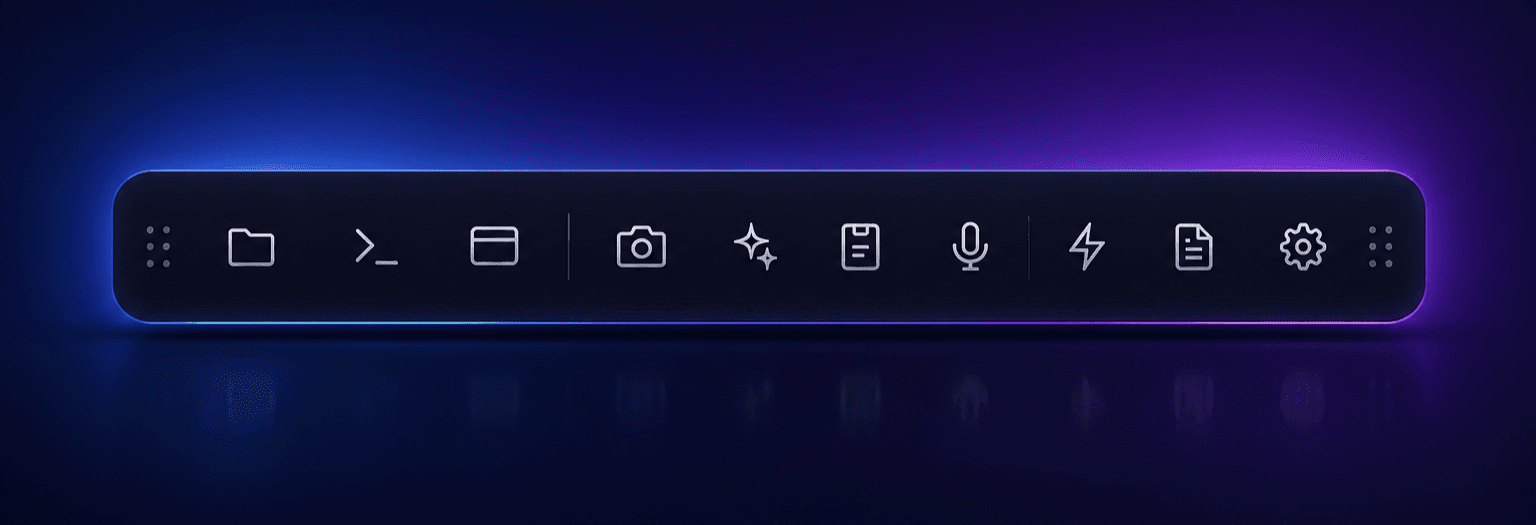
Modern software engineering workflows are deeply fractured by relentless context-switching between terminals, clipboard managers, rich-text notes, AI assistants, and documentation. DockShift solves this fragmentation by collapsing these utility layers into a high-performance, system-level command dock that sits persistently in memory and reveals itself via a system-wide Ctrl+Shift+D hotkey. Rather than acting as a superficial drawer, it integrates a native workspace snapshot manager that captures all running applications, their respective process paths, window sizes, and precise coordinate bounds, allowing engineers to completely restore their complex desktop layouts in a single click.
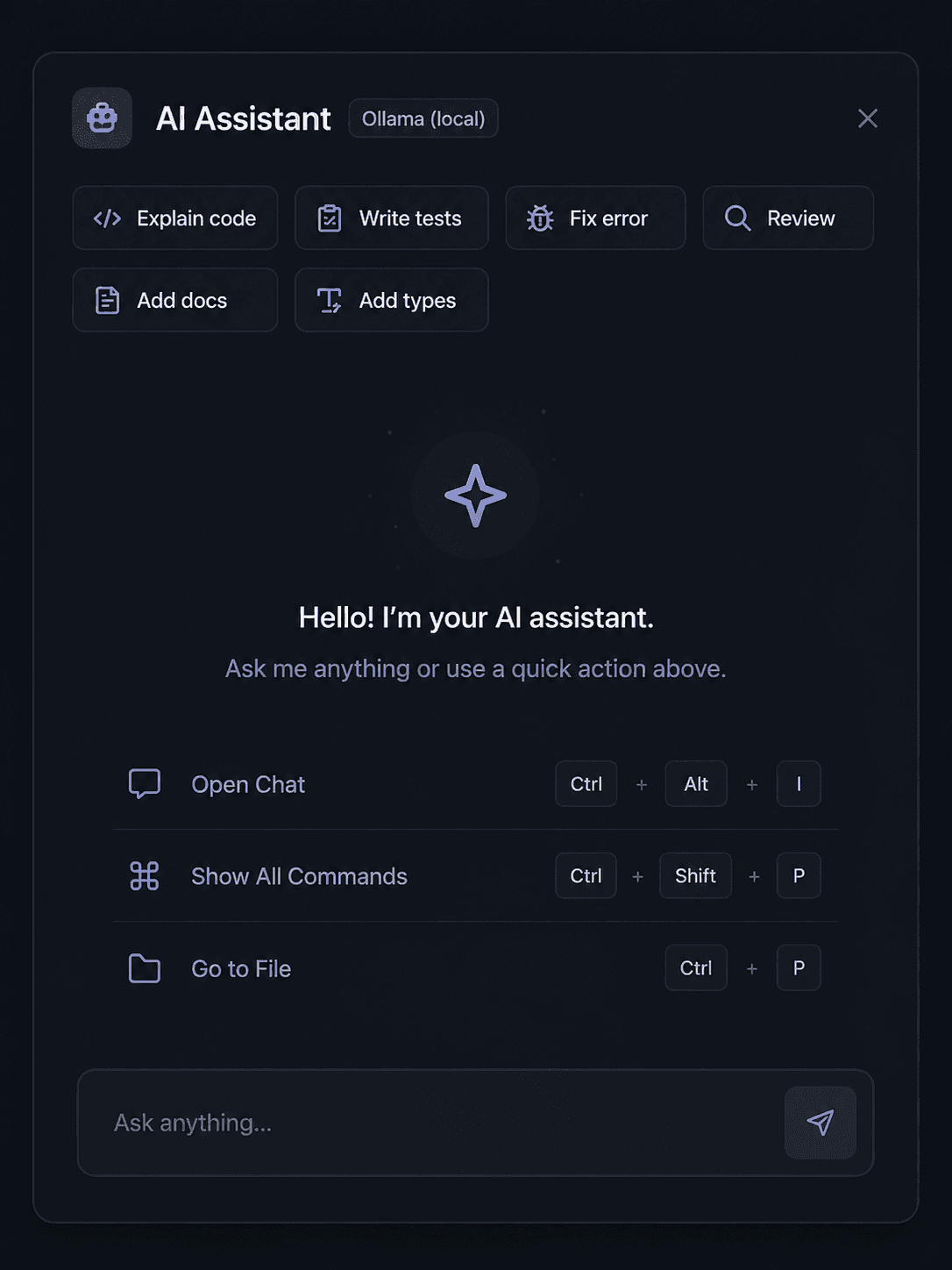
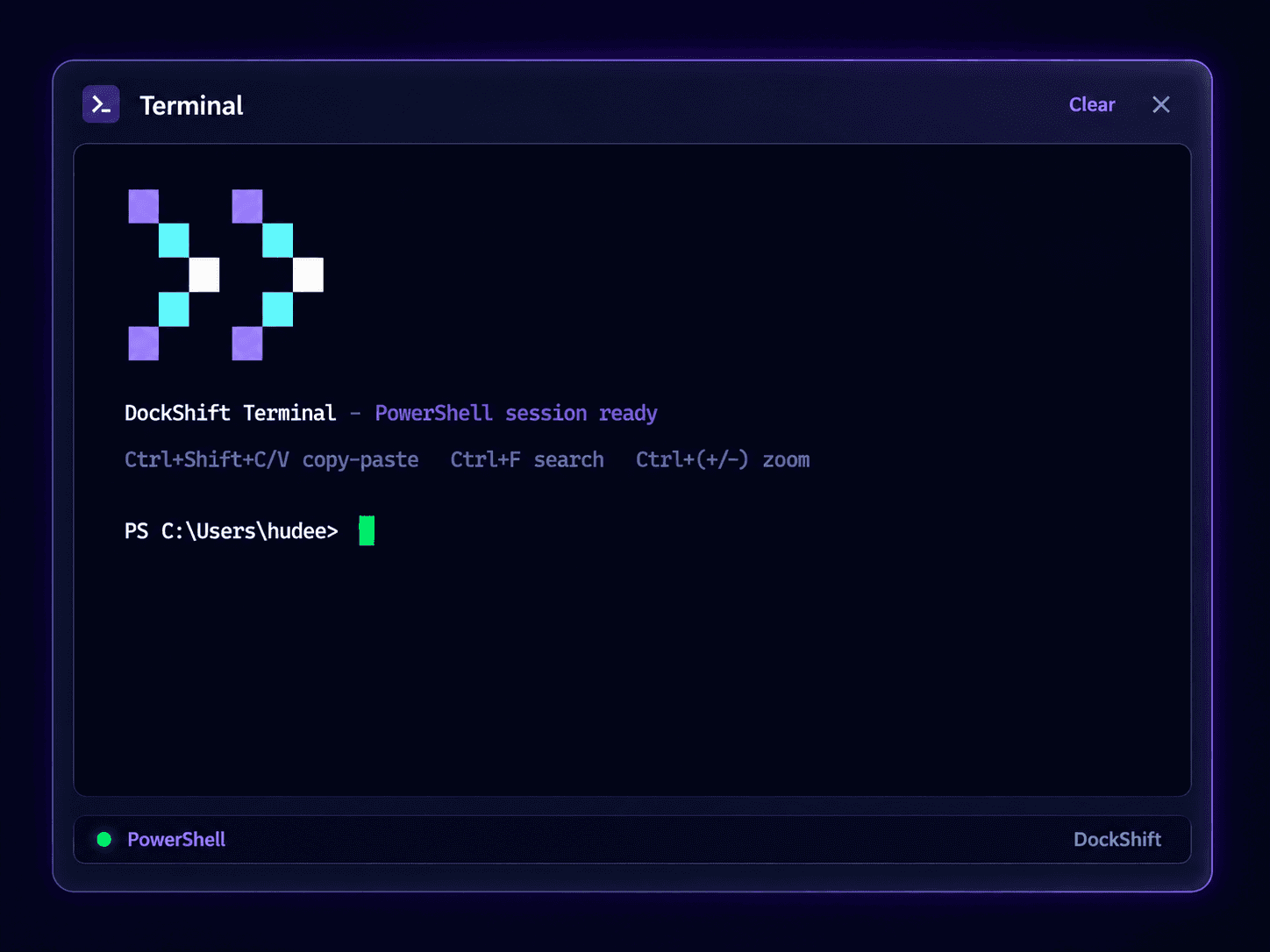
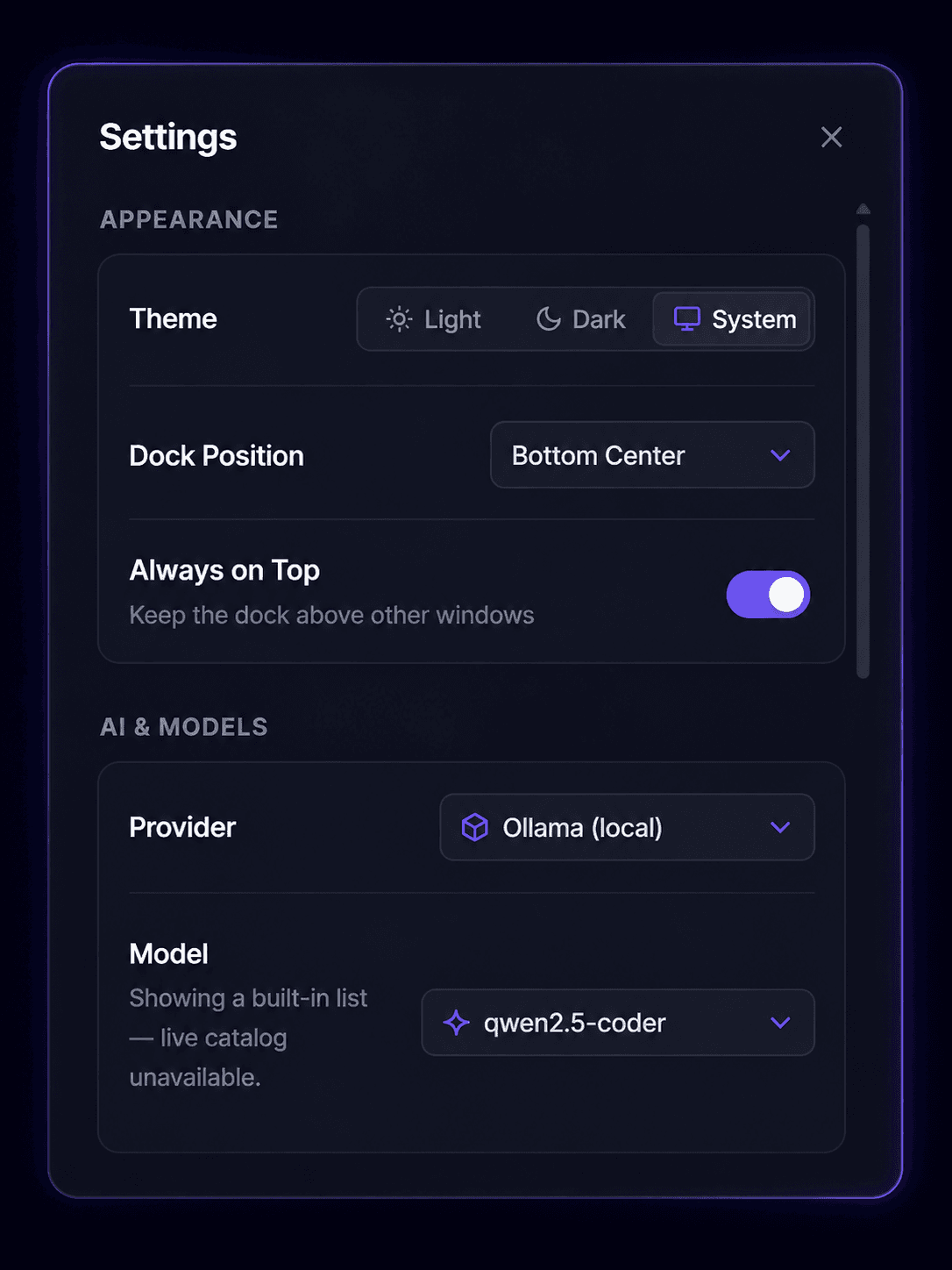
Under the hood, DockShift is built on a highly secure Electron architecture, enforcing a strict process split between a privileged Node.js main process and a fully sandboxed React + Vite renderer that communicates exclusively via an allowlisted IPC bridge in the preload layer. The workspace restoration engine compiles a dynamic C# helper class inside an asynchronous PowerShell child process to interface directly with the Win32 API (user32.dll and dwmapi.dll), resolving window lists and filtering cloaked UWP host frames, tool HUDs, and off-screen elements. The terminal panel mounts GPU-accelerated xterm.js instances backed by node-pty sessions with automated credential scrubbing, while the multi-provider AI subsystem utilizes OS-level key encryption to securely stream models (Gemini, OpenAI, Claude, and local Ollama) without ever exposing secrets to the frontend.
By replacing generic electron overlays with custom Win32 process tracking and native hooks, DockShift eliminates the memory overhead and latency typical of multiple background helper utilities. The application delivers sub-millisecond hotkey invocation response times and executes complete multi-window workspace saves and restores in under three seconds. The resulting platform bridges the gap between hardware-level performance and modern web UI design, offering engineers a keyboard-driven, securely isolated command center that maximizes focus while consuming minimal system resources.