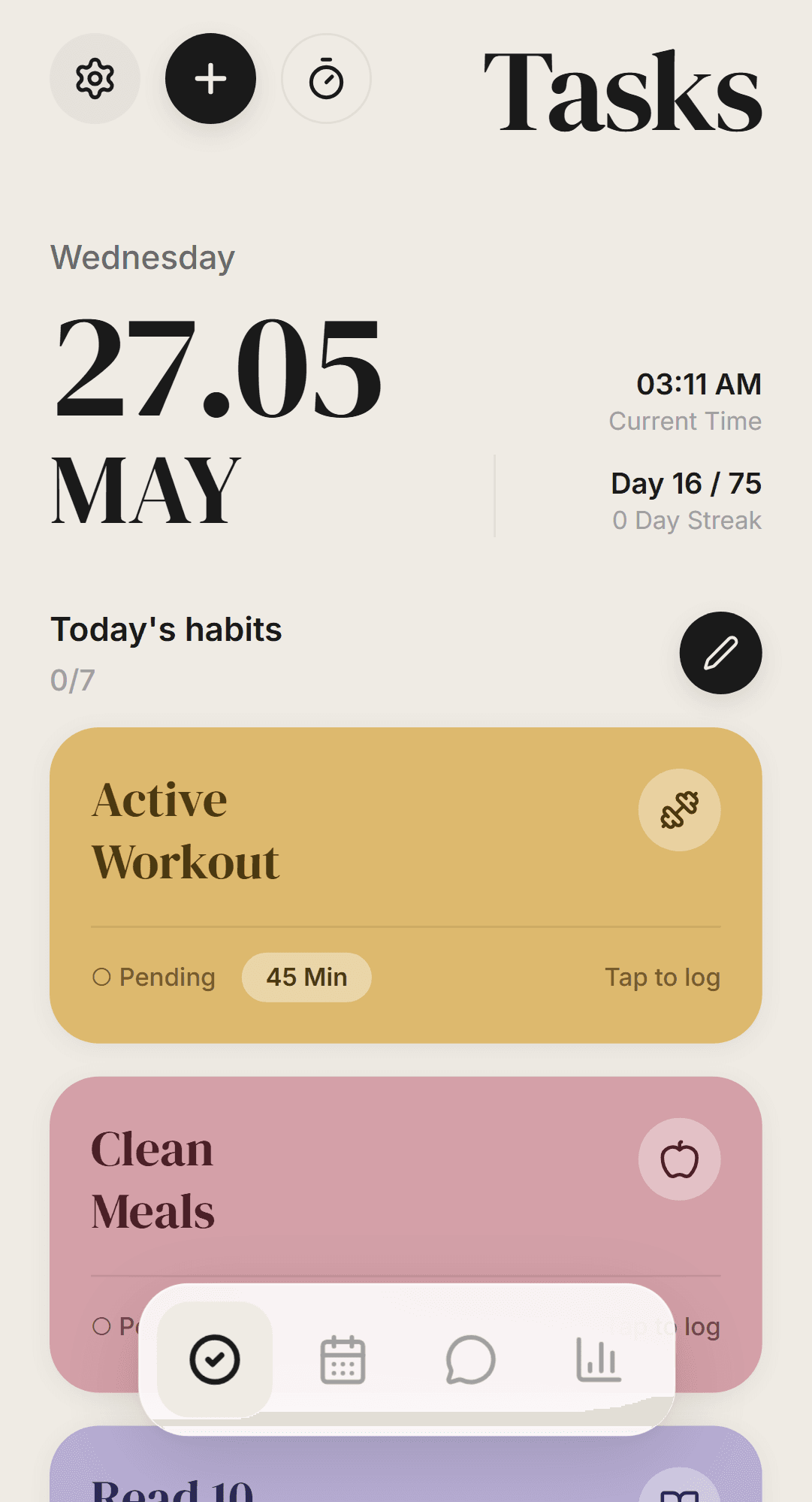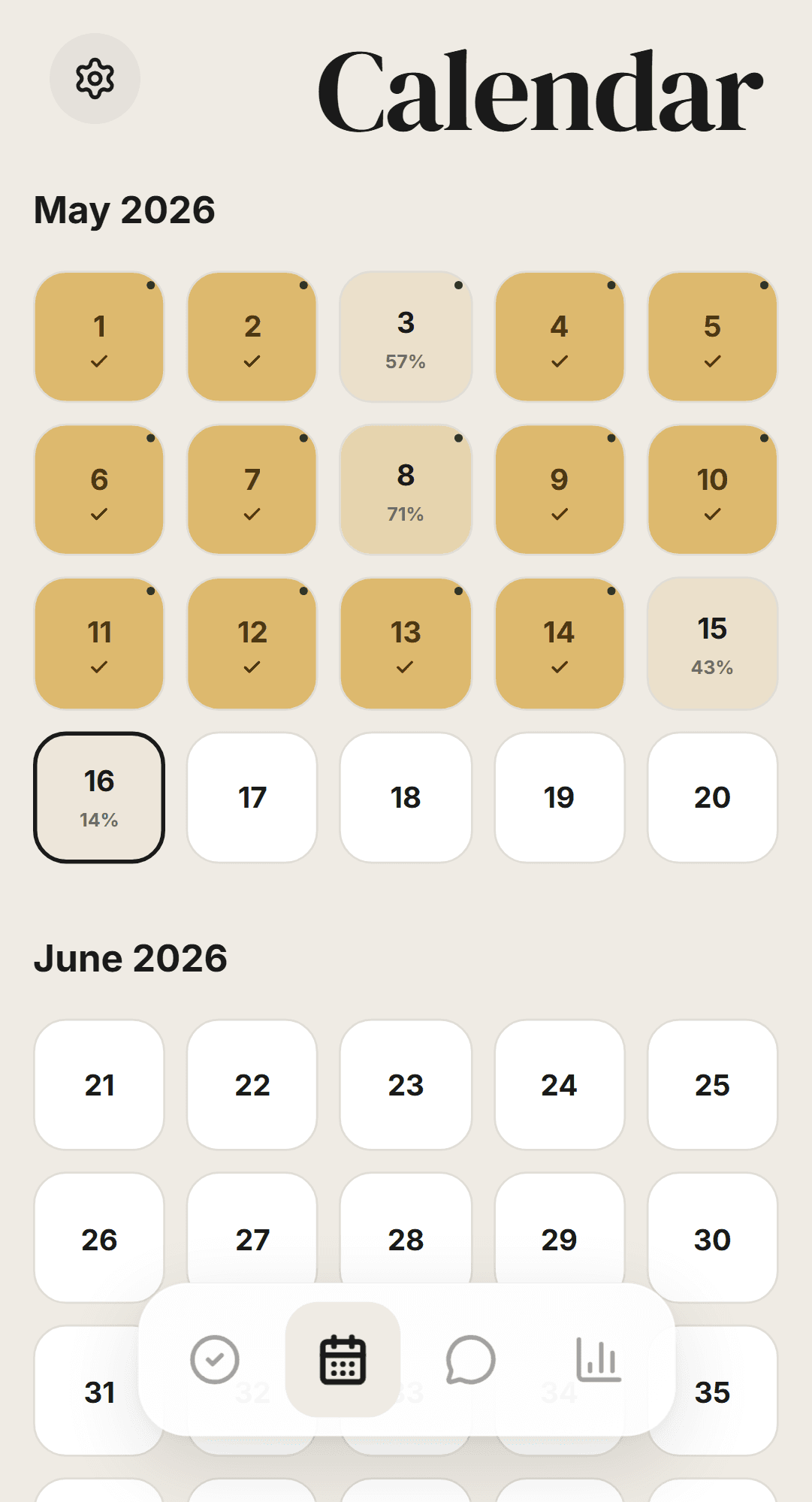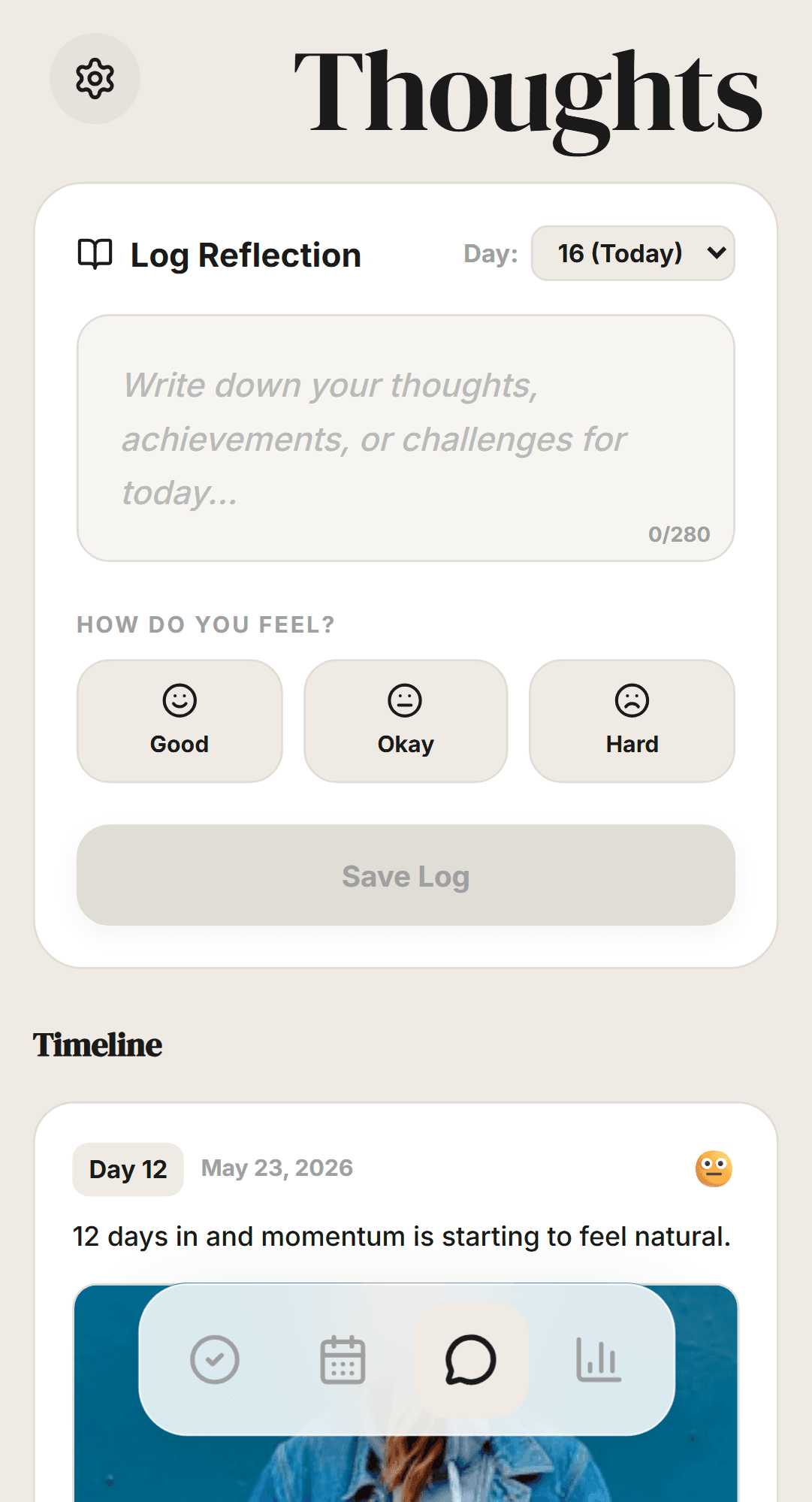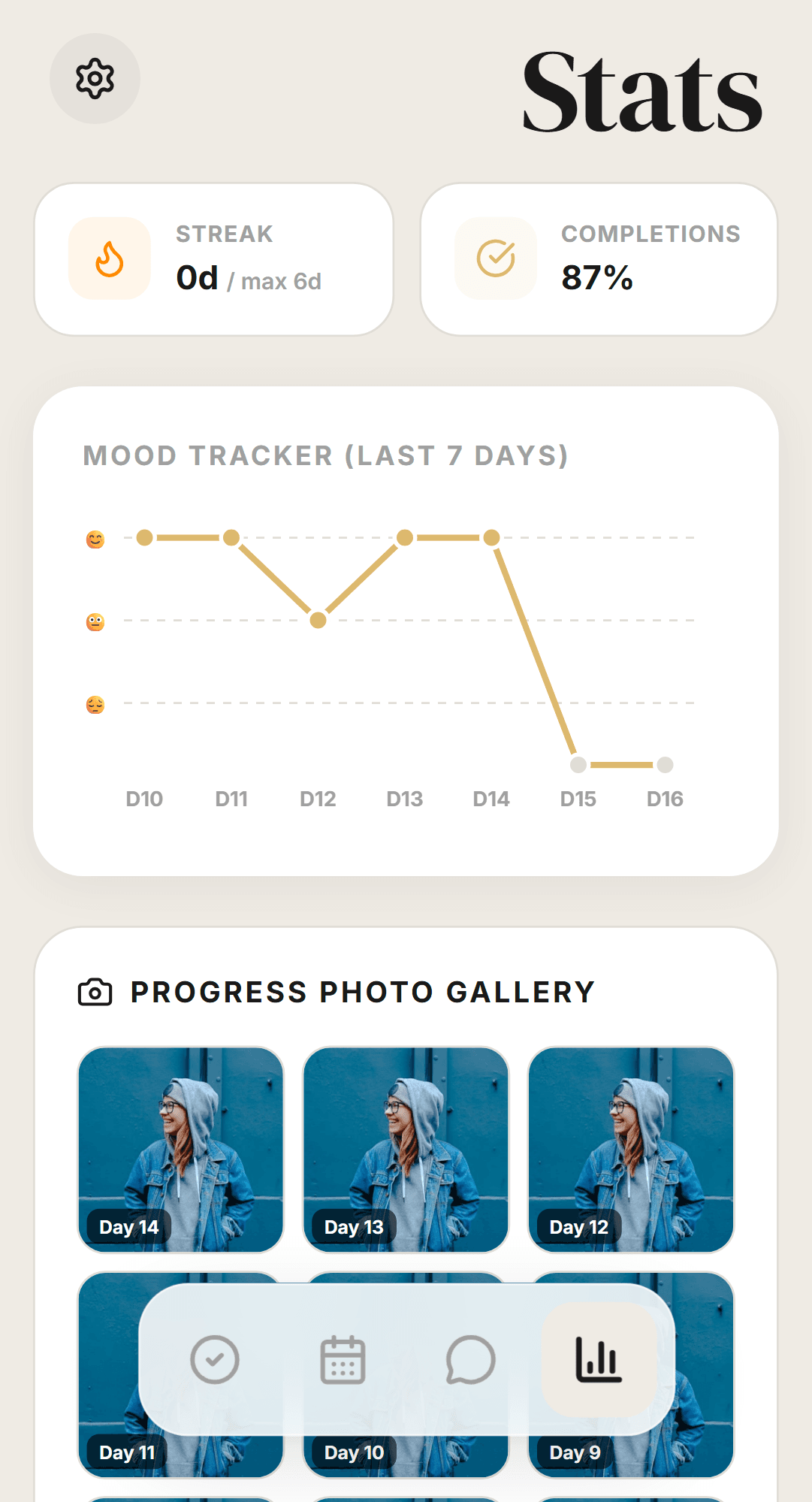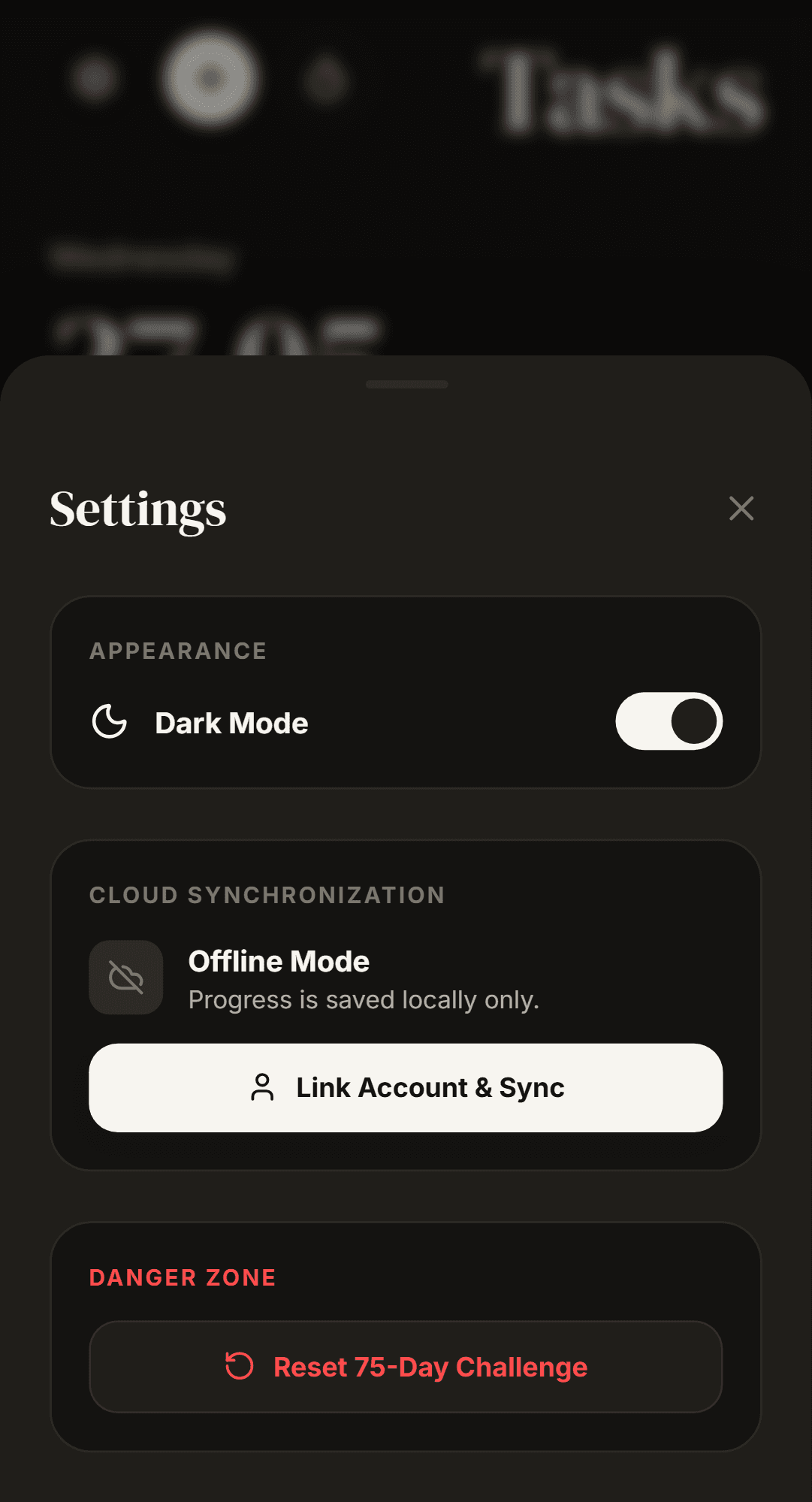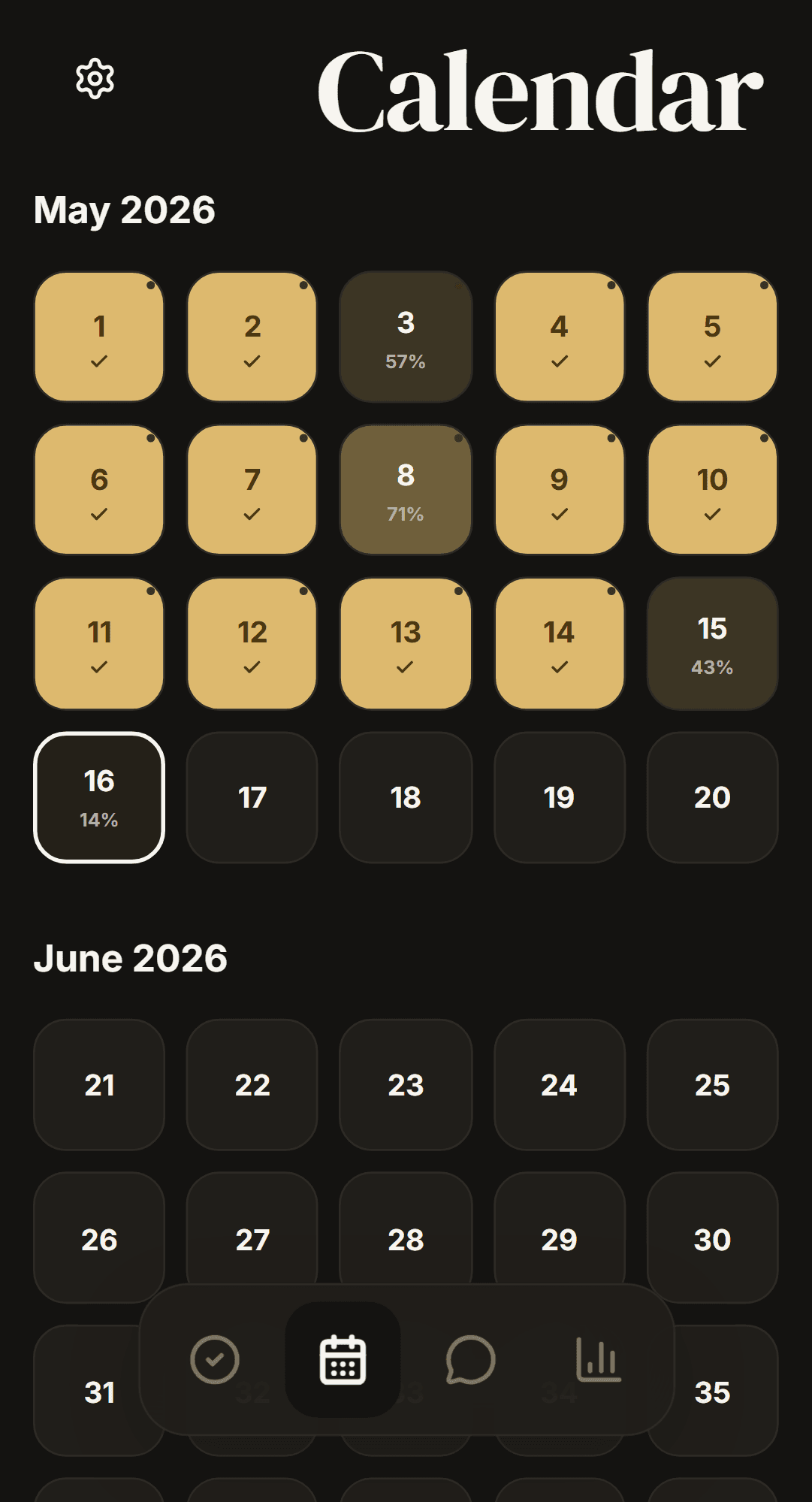
The 75-Day Challenge demands absolute operational consistency under any network condition. Web-based wrappers typically fail due to rendering lag, offline data loss, and high latency under deep UI state transitions. Jelly Bean is a native-performance, cross-platform habit tracking system engineered specifically to resolve these mobile-first constraints, providing a fluid, highly interactive dashboard that integrates progress logging, SVG-rendered telemetry, focus timers, and photo journaling.
Built with React 19, TypeScript, and Capacitor 6, the system leverages a decoupled, offline-first state machine. All user interactions are instantly committed to localized storage to achieve immediate UI updates, while an asynchronous synchronization layer coordinates transactional CRUD operations against a remote Supabase PostgreSQL database. Under the hood, the data model utilizes structured relations: custom habits are isolated inside JSONB structures and dynamic arrays within highly indexed tables, fully protected by robust Row-Level Security (RLS) policies. Dynamic UI animations are driven by hardware-accelerated Motion physics, and daily progress photo assets are uploaded directly via authenticated, bucket-scoped Supabase Storage streams.
The architecture achieves zero-latency performance on native Android builds, successfully handling intermittent network connectivity without state corruption. A clean modular refactoring cycle decoupled core views (onboarding, SVG telemetry, stats, and custom Pomodoro timers) into single-responsibility components, reducing the primary runtime shell complexity by 37%. The resulting system delivers a resilient mobile experience that seamlessly migrates anonymous guest data to cloud databases upon sign-up, ensuring secure, crash-free performance throughout the rigorous 75-day cycle.